Villa Weddings in Italy: A Photographer’s Field Guide
By Anatoly & Julia · Destination wedding photographers · Updated October 2026
Couples write to us saying “we want a villa in Italy” and mean three different days. This guide is what we know from photographing those days — plus the published rules and rates of the villas everyone asks about, with sources linked where the numbers come from.
What “villa wedding” actually covers
The lakefront villa. Como and Garda. Stone balustrades, cypress gardens, arrival by water. The day is built around the lake: getting ready with the water below, a boat between ceremony and dinner, portraits when the light drops behind the mountains.
The countryside estate. Piedmont, Tuscany, the hills nobody’s heard of. Terracotta walls, a courtyard, the village church a short walk away. The whole day happens in one place, and it feels like a family occupying a house rather than guests attending an event.
The grand hotel. When a villa’s logistics don’t fit — accommodation on site, a kitchen that answers to you, no marquee mathematics — a lakefront grand hotel gives the same century-old rooms and jetty with half the moving parts.
We’ve photographed weddings in all three formats; the photographs in this guide come from those days, not styled shoots.
How the regions change the day
Lake Como. The most famous names, the strictest rules, the most moving parts. Guests usually stay across several hotels, transfers happen by boat or narrow lakeside roads, and every named villa has its own supplier and photography policies. For the camera: water, stone and mountain light — and timings shaped by boat logistics.
Lake Garda. A similar water-and-mountains feel with more lakefront hotels that host the whole weekend under one roof, which simplifies guest logistics enormously. We photographed a grand-hotel wedding here built entirely around the hotel and its jetty.
The countryside — Piedmont and beyond. One estate, everyone in one place, the village church a short walk away. Fewer transfers means more unhurried photographs of people, not logistics. Our Soriso wedding below is the worked example.
Tuscany. The classic estate-wedding region — La Foce, Villa Cetinale and Villa Gamberaia come up in nearly every planning conversation. We haven’t photographed a full Tuscan wedding yet, so our notes there come from planning research rather than our own days — and we’d rather tell you that than pretend otherwise.
Villas we know from the inside
Villa Melzi gardens, Bellagio — for portraits, not ceremonies
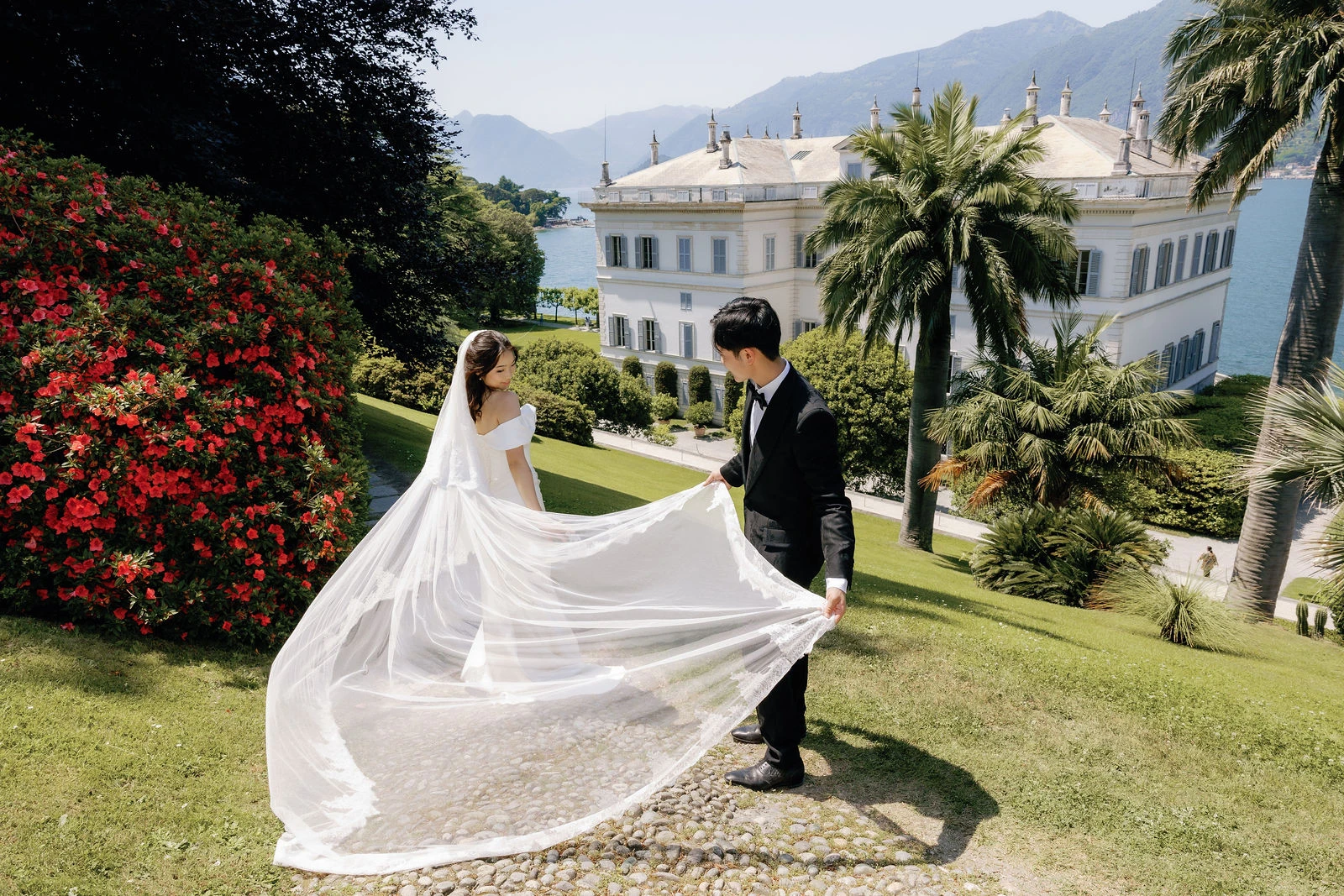
First, the important part: under the gardens’ official rules, weddings, ceremonies and vow exchanges are not held at Villa Melzi, there is no private hire and no exclusive access. What the gardens are superb for is a portrait chapter inside a Como wedding day — which is exactly how we photographed this wedding: portraits in Como’s old town, then the gardens and the lakefront pavilion, then a wooden boat across the lake. From the villa’s published terms: a photo-shoot permit is €427 including VAT for the day, the photographer’s entry is included, everyone else pays the €10 garden ticket — and there are no refunds on cancellation.
A countryside villa in Soriso — Piedmont
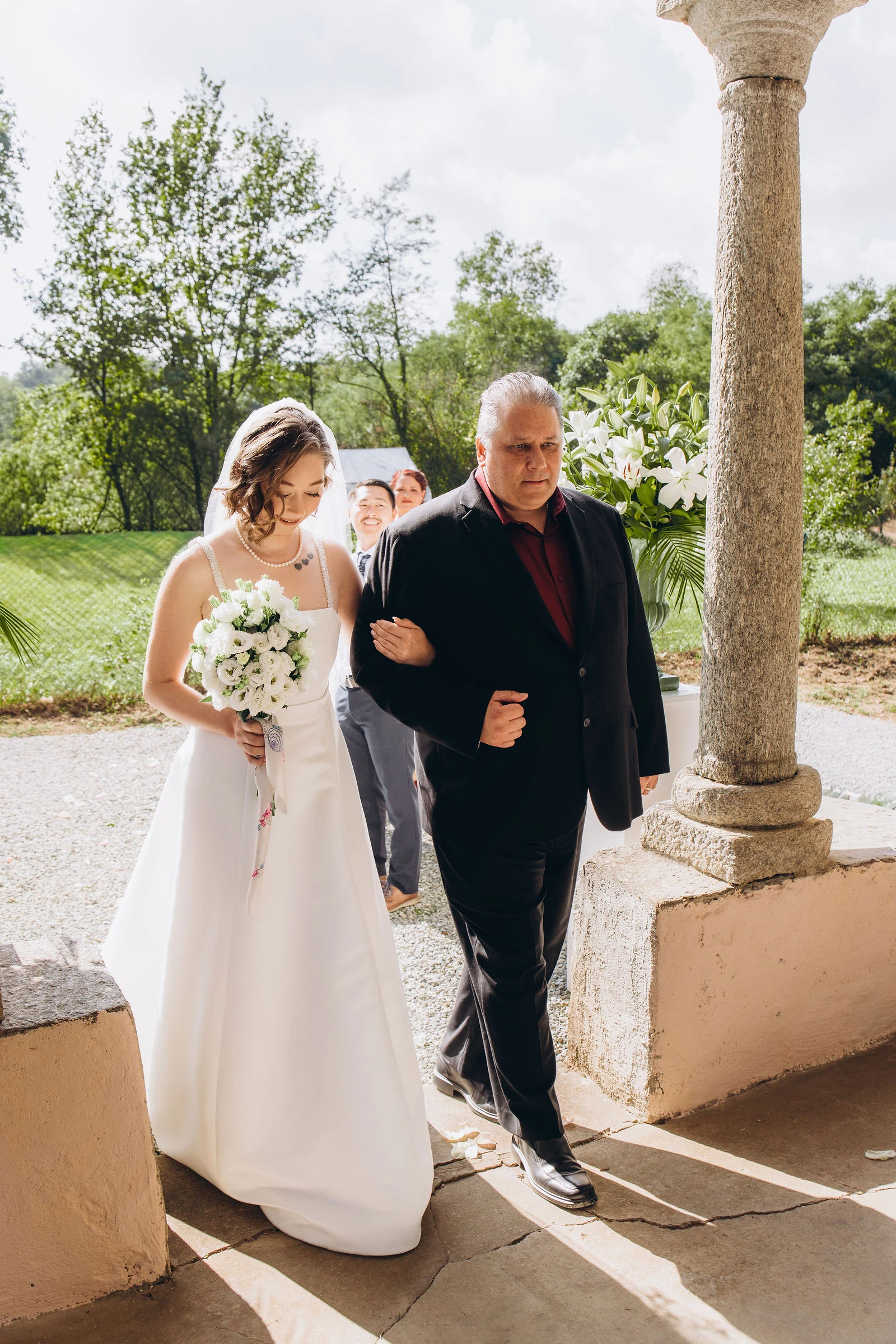
Not a name you’ll find on venue lists, which is the point. This wedding had getting ready in the villa courtyard, a ceremony in the village parish church a few minutes’ walk away, and aperitivo back between the terracotta walls as the evening came down. A day that never left the village — and never needed to.
The lakefront grand hotel — Lake Garda
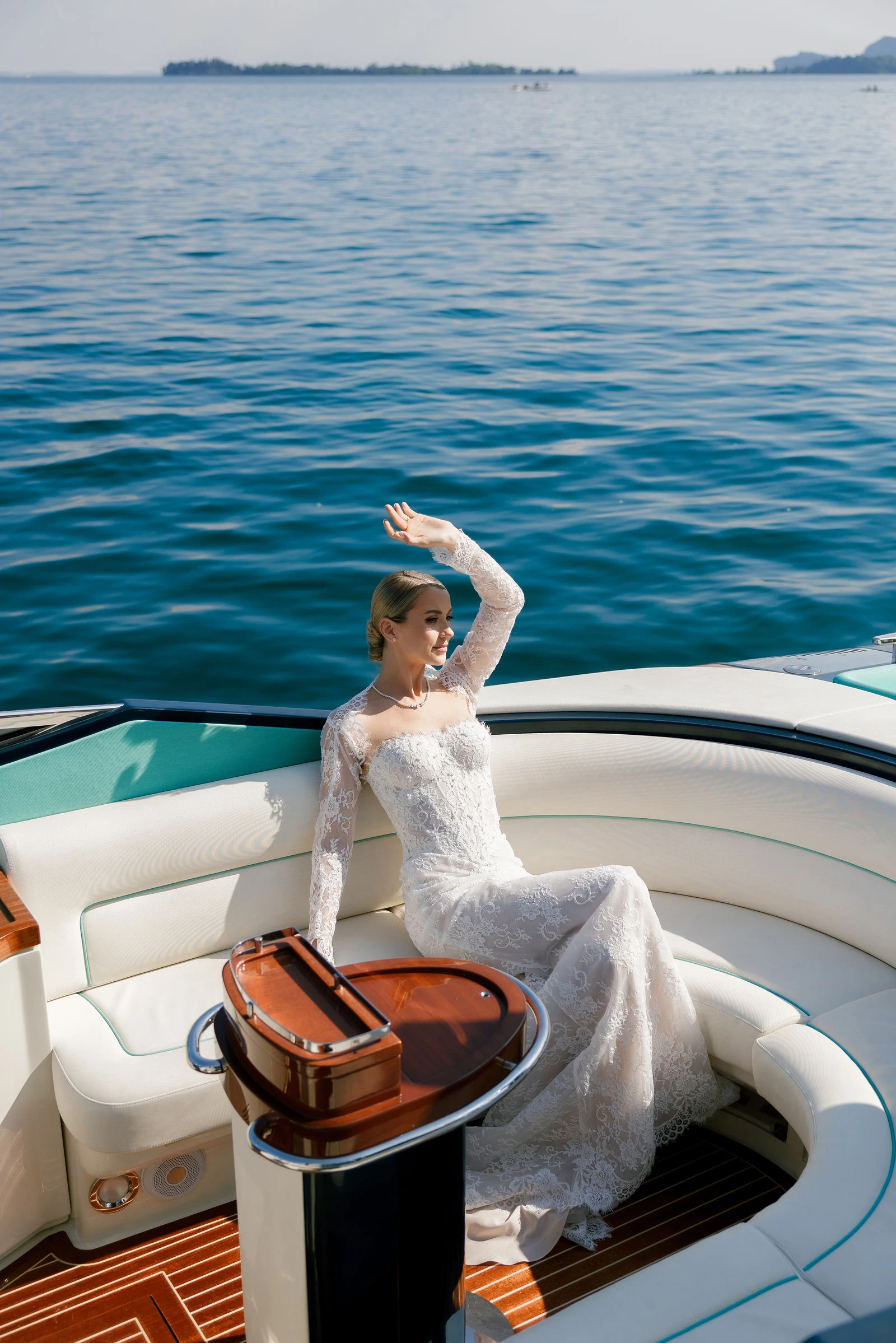
The couple took over a grand hotel: getting ready upstairs, portraits in its corridors, a Riva from the jetty out onto open water. Everything a villa gives the camera — age, stone, water — with rooms for every guest one lift away.
Researched venues: what the published terms say
We photograph on Lake Como constantly, including sessions around the venues below — but we haven’t shot full weddings at them, so this section reports their published terms rather than our wedding-day experience.
Villa del Balbianello (Lenno). Two different products, two sets of rules. For private events, FAI’s pages list the Loggia Durini for ceremonies (up to 60 seated), the Terrazzo Canfora for aperitivo (up to 100) and the lakeside for dinner (up to 130); event booking terms come directly from FAI. Separately, photo-session permits in the gardens are their own product — gardens only, with a booking window that opens about three months ahead and summer dates that vanish quickly. One published rate we can point to: €15,700 + VAT for a six-hour wedding for up to 30 guests (2027 rate sheet). Access is by water taxi or a kilometre uphill from Lenno; in a gown, take the boat.
Villa Balbiano (Ossuccio). A published one-day weekday hire from €57,500 including VAT, venue only, with mandatory extras of roughly €17,250 listed separately and a garden marquee required above certain guest counts.
Villa Erba (Cernobbio). Published evening hire around €20,000–24,000 + VAT. Villa Sola Cabiati, Villa Pizzo, Villa d’Este and Grand Hotel Tremezzo round out the names that come up in almost every Como conversation.
Treat every figure as a starting point: season, weekday and guest count move all of them, and rate cards change year to year.
What a villa wedding in Italy costs: three scenarios
Same rules for each scenario: planner-published 2026–27 figures (Weddings Abroad Guide, Ville Parravicini, BridesVenues), one wedding day unless stated, excluding guest travel and accommodation. Photography and video included as a line.
An elopement or tiny ceremony on Como — up to ~30 guests. Ceremony-rate venue hire (named villas publish short-format rates, like Balbianello’s six-hour rate above), a restaurant dinner instead of catering production, photography, flowers, hair and make-up, a boat. Realistic planning range: €20,000–40,000, dominated by the venue’s short-format fee.
~50 guests, one day at a countryside estate. Estate hire, catering at €180–450 per guest, flowers and décor €6,000–15,000, music €3,000–8,000, photography and video €5,000–12,000, a planner’s fee. Realistic planning range: €60,000–90,000.
~100 guests, full day at a named Como villa. Venue €20,000–60,000 depending on the name; catering alone reaches €18,000–45,000 at the same per-guest rates — on many quotes it overtakes the venue as the biggest line — plus production (lighting, furniture, marquee where mandatory), flowers, music, a planner at 10–20% of budget, photography and video. Published ranges land at €90,000–140,000+.
What these ranges don’t include, and quotes often reveal late: transfers and boats for guests, accommodation blocks, a weather plan (tent or indoor backup), security and cleaning fees some villas mandate, and supplier travel.
Field notes from behind the camera
- Check the rain room with your eyes, not the floor plan. The “indoor backup” at some villas is a beautiful hall; at others it’s a basement function room. Ask for photos of the wet-weather space with tables set — if it would disappoint you, it will disappoint the photographs too.
- The getting-ready room decides the first two hours of the gallery. Window light, space to move, somewhere for the dress to hang. A grand suite with one small window photographs worse than a modest room with morning light.
- Portraits work best as two short escapes, not one long one. Fifteen minutes after the ceremony while guests head to aperitivo, and ten minutes at golden hour before dinner. You never vanish from your own party, and the light does the heavy lifting in the second slot.
- Ask the access questions before the timeline is drawn. Which areas are actually yours, from when; where photography is restricted; when suppliers may arrive. At public-facing gardens like Melzi, plan around opening hours rather than against them.
- Boats take longer than anyone budgets. “Across the lake” is 40 minutes door to door once docking and boarding are real. Build it in — it’s also where some of the best frames happen.
One real day: how the Soriso wedding was built
Getting ready in the villa courtyard through late morning — dress on the balcony rail, groomsmen in the yard, no transfers, everyone in one place. A short walk to the parish church; the ceremony inside the village’s own walls, rings and vows in the quiet, then confetti on the steps. While guests drifted back for aperitivo, we took the couple up to the hilltop portico for twenty minutes of portraits under the arches — and were back before anyone missed them. Evening came down over a courtyard with the tables already set. One village, no boats, no convoy: the whole day held in a few hundred metres, which is exactly why the gallery feels unhurried.
Symbolic or civil: both are real weddings
Italian civil ceremonies take place at town halls or specifically licensed venues; many villas host symbolic ceremonies, with the legal registration done at the comune or at home. Couples choose the symbolic route for freedom of place and script, and the civil route to have the stamp in the same hour. Emotionally — and in photographs — both carry the full weight of the day; the choice is legal logistics, not authenticity.
Questions couples ask us
How much does a villa wedding in Italy cost?
By scenario: an elopement-scale day from about €20,000; around 50 guests at a countryside estate €60,000–90,000; around 100 guests at a named Como villa €90,000–140,000+ — planner-published 2026–27 ranges, with what’s included spelled out in the three scenarios above.
Can we get legally married at a villa?
Only at licensed venues; otherwise the civil act happens at a town hall and the villa hosts a symbolic ceremony.
How far ahead should we book?
Twelve to eighteen months for a summer Saturday at a known villa. Event terms at FAI venues come directly from FAI; photo-session permits are a separate product with much shorter windows.
Do we need a wedding planner?
For a full villa wedding with foreign suppliers — yes: contracts, logistics and the running order are a planner’s job. For an elopement or a small countryside wedding, the villa’s manager typically runs the house while we build the photography timeline with you — but neither of us replaces a planner’s coordination.
When is the best season?
May, June and September carry the most reliable light and temperatures. July and August are hotter and busier on the lakes; April and October are quieter gambles.
How we work at villa weddings
We photograph the day as it actually happens — the vows, the look from the second row, the speech that runs long — and build the portrait moments into your timetable rather than around ours. Full days from getting ready to the last dance, as a husband-and-wife team.
Planning a villa wedding anywhere in Italy? Send us the date and the venue — we’ll confirm our availability and walk you through exactly how we’d cover your day.